“The United States has essentially a one-party system and the ruling party is the business party.” — Noam Chomsky1
In the cold light of the voting booth, the average American often feels less like a citizen and more like a cog in a machine designed to extract value from their labor. For decades, the political establishment has offered a rotating cast of characters who, despite varying rhetoric, preside over the same fundamental reality: stagnant wages, skyrocketing rents, and a public infrastructure that crumbles while private profits soar. This shared struggle creates a visceral sense of alienation, a feeling that the game is rigged not by accident, but by design.
It is here, in this chasm between the voter’s reality and the politician’s promise, that Noam Chomsky’s observation rings most true. The United States, he argued, is not a democracy of competing ideas but a “one-party system” where the ruling faction is the “Business Party.”2 This party has two wings—Democrats and Republicans—who differ on cultural issues but are united in their fealty to corporate stability. In New York City, this dynamic has long been the unwritten rule of municipal politics. Whether the mayor was a billionaire financier like Michael Bloomberg or a “blue-collar” ex-cop like Eric Adams, the ultimate constituent remained the same: the Real Estate Board of New York (REBNY), Wall Street financiers, and the corporate lobbyists who pave the corridors of Washington D.C. and Albany.
In his book Democracy and Its Crisis, A. C. Grayling identifies this phenomenon not merely as corruption, but as a structural failure of representative democracy. He argues that when the gap between the governed and the governing elite becomes an unbridgeable chasm, the system ceases to function and becomes a management system for the status quo.3
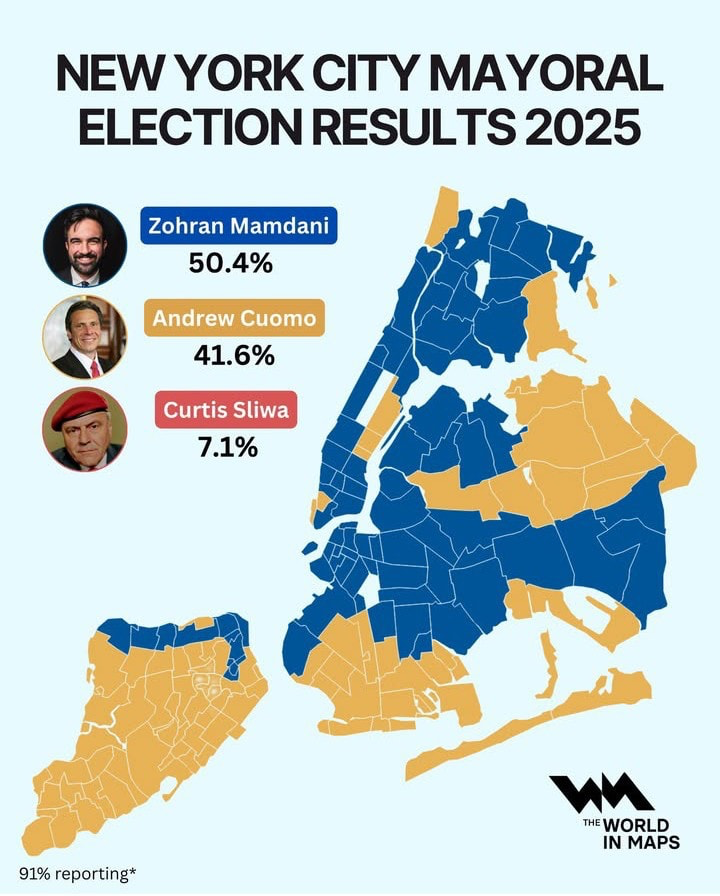
For years, conspiracy theorists on the Right have railed against a “Deep State”—a shadowy cabal of spies and bureaucrats allegedly subverting the will of the people. But Zohran Mamdani’s historic victory in the NYC mayoral election was built on a radical reclamation of this narrative. He argued that the real deep state isn’t a secret society meeting in dark basements; it is the open, legalized bribery of the capitalist class that operates in plain sight. It is the real estate developers who write housing policy, the private equity firms that buy up physician practices, and the medallion lenders who trap taxi drivers in indentured servitude. Zohran Mamdani did not win by pivoting to the center, as decades of political consultants advised. He won by naming the enemy—the Business Party—and offering voters a concrete exit ramp from the capitalist exploitation that this “Deep State” enforces. He shattered the illusion of choice by refusing to be just another manager of New York’s decline. Instead, he offered a new system.
Cultural Populism vs. Material Populism
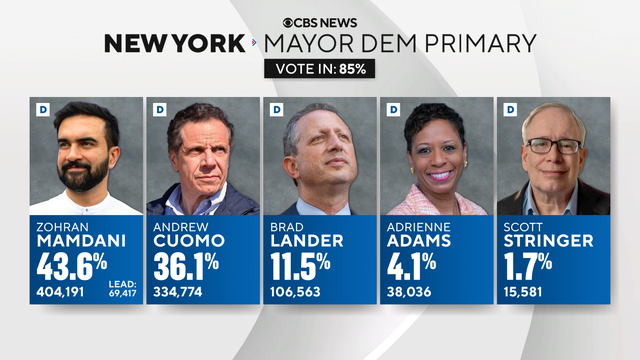
To understand the Mamdani phenomenon, one must confront an uncomfortable parallel: his victory shares significant DNA with the appeal of Donald Trump. To the polite society of the “Business Party” establishment—the mainstream Democrats and traditional Republicans—this comparison is heresy. Both candidates recognized that the status quo was fundamentally broken, and both refused to speak in the polished, empty platitudes of the political elite.4 They ran on an “Anti-Establishment Mandate.” Trump ran against the “Swamp” of Washington; Mamdani ran against the “Machine” of New York—specifically the Adams administration, the Cuomo dynasty, and the ossified Democratic establishment that had long ago prioritized donor maintenance over constituent service. Both bypassed the traditional media gatekeepers, speaking directly to the material pain of the voter.
This break with the establishment was essential because, as Robert McChesney argues in his book Rich Media, Poor Democracy, the commercial media system is not a neutral arbiter of the truth but a key pillar in corporate America. McChesney states that the consolidation of media removes the critical anti-capitalist viewpoints from the public sphere, creating a “communication politics” that serves the interests of the wealthy.5 Similarly, John Street in his Media Politics and Democracy notes that political power is often maintained through the framing of what is considered “realistic” and “serious.”6
When the New York Times or CNN—organs of the Business Party—tried to suppress or ridicule them, it only strengthened their credibility with a populace that had stopped trusting the news cycle years ago. However, the similarity ends at the diagnosis; the cure is where they diverge. This distinction is best understood as the difference between Cultural Populism and Material Populism. Donald Trump employs Cultural Populism. He correctly identifies the voter’s anger—the feeling of loss, of theft, of being left behind—but he directs that anger downward. He channels it toward cultural definitions: immigrants, “wokeness,” minorities, and the vulnerable. He offers a psychological wage of superiority to his base, promising that they will be “great again” by virtue of who they are, not by changing the economic structures that oppress them.
Zohran Mamdani employs Material Populism. He, too, validates the voter’s anger, but he directs it upward. He points the finger at material barriers: the landlords gouging rents, the MTA board prioritizing bondholders over riders, and the medallion lenders preying on immigrants. While Trump’s populism relies on exclusion, Mamdani’s relies on a shared material interest against a common oppressor.7 This distinction is crucial because it explains why the emotional energy of their rallies felt so similar, even as their policy prescriptions were diametrically opposed. Voters in the outer boroughs didn’t necessarily want “socialism” or “conservatism” in the abstract; they wanted agency. They wanted a weapon to wield against the forces making their lives impossible. Trump offered a cudgel of culture; Mamdani offered a shield of solidarity.
Action as Language
The “Business Party” speaks in the language of bureaucracy: tax credits, means-tested subsidies, and “public-private partnerships.” These are solutions designed to be unobjectionable to donors, offering slight relief without altering the balance of power. Mamdani spoke a different language: Action. The most potent example of this—and the foundation of his credibility with the working class—was the 2021 Taxi Workers Alliance hunger strike. For years, New York City’s taxi drivers, a workforce predominantly made up of immigrants, had been crushed by predatory lending practices. The price of a medallion, artificially inflated by city negligence and lender greed, had collapsed, leaving drivers with hundreds of thousands of dollars in debt they could never repay. Suicides were becoming tragic, regular occurrences. The “Business Party” response was typical: thoughts, prayers, and complicated debt restructuring plans that protected the lenders’ bottom line.
Mamdani did not form a committee. He did not issue a press release. He went to City Hall Park and stopped eating. For 15 days, Mamdani joined the taxi drivers in a hunger strike. He put his physical body on the line, sharing the visceral pain and risk of his constituents. When they finally won—securing a city-backed guarantee that capped debt at $170,000—it wasn’t just a policy victory; it was a revelation.8 It proved that Mamdani was not a politician managing a constituency; he was a comrade sharing the risk. The image of him breaking his fast with dates and avocado alongside the drivers communicated more than a thousand white papers ever could.9
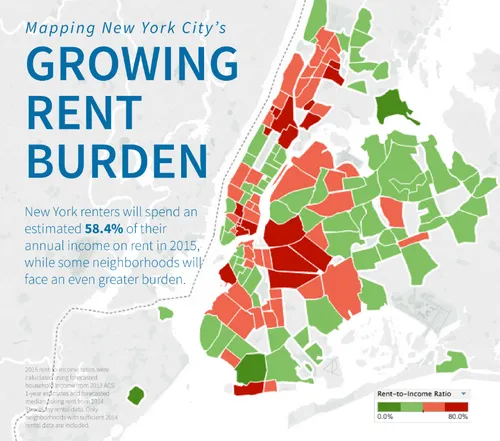
This philosophy of “Action as Language” permeated his mayoral platform, prioritizing material gains over abstract metrics. First, the Rent Freeze. In a city where real estate is the primary engine of capital, proposing a freeze on rent-stabilized units was a direct declaration of war against the “Deep State” of REBNY. The Business Party warned of capital flight and crumbling housing stock, citing economic orthodoxy. But for the millions of renters paying half their income to landlords who lived in different states (or countries), the Rent Freeze was an immediate material lifeline.10 It signaled that the right to a home superseded the right to a profit. Second, Free Buses. By treating transit as a public right rather than a service to be purchased, Mamdani rejected the commodification of movement. The “Business Party” views the MTA as a business that must balance its books; Mamdani viewed it as the circulatory system of the city, which should be free at the point of use to ensure the health of the whole body.11 Third, and perhaps most surprisingly to his critics, was his approach to Small Business Deregulation. The Business Party often conflates “pro-business” with “pro-corporate.” They defend regulations that, while theoretically protecting the public, often serve as a moat for large corporations. A multinational chain like Starbucks or Walmart has an army of lawyers to navigate complex zoning laws and permitting fees; a family-owned bodega or a local barber shop does not.
Mamdani flipped the script on the Right by proposing a “Mom-and-Pop Czar” dedicated to cutting fines and red tape.12 He explicitly argued that excessive regulation is a tool of the “Business Party” to crush small competition. By championing deregulation for the little guy, he wasn’t conceding to neoliberalism; he was launching a calculated socialist attack on monopoly power.13 He understood that for a true local economy to flourish, the boot of bureaucracy—often worn by the state but laced by corporate lobbyists—had to be lifted from the necks of the working class.
Citizens, Not Consumers
Ultimately, Zohran Mamdani’s victory was a rejection of the paternalism that defines the American one-party system. The “Business Party,” in both its Democratic and Republican guises, treats voters as children to be managed. They are problems to be solved, demographics to be targeted, or unruly voices to be suppressed via gerrymandering and voter suppression. Bernard Crick in Democracy: A very short Introduction, sets forth the idea that democracy is not just a set of institutions but a “political method” which demands the active participation of citizens in the public sphere. This concept of active participation is exactly what the “Business Party” seeks to suppress, preferring a passive electorate that behaves like consumers rather than citizens.14
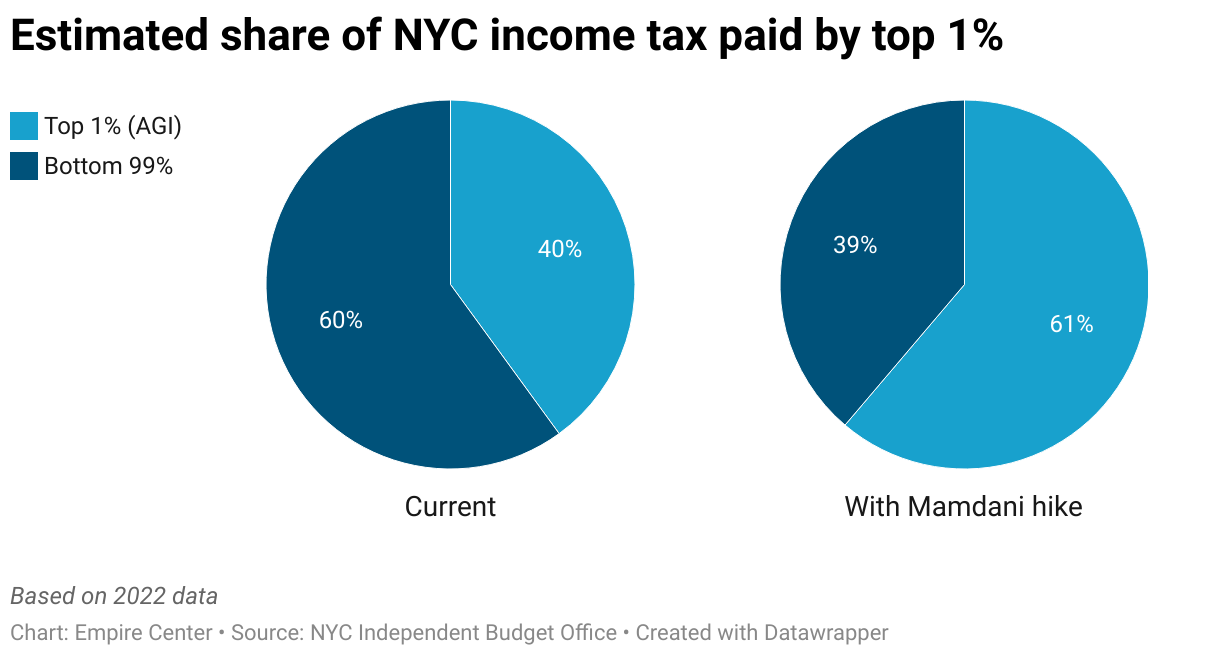
Mamdani, like Trump, treated his base as equals. But where Trump’s equality was based on a shared grievance against a cultural “other,” Mamdani’s was based on a shared struggle for dignity. He validated their anger not by dismissing it as “misinformation” or “deplorable,” but by agreeing that they should be angry. He told them that their poverty was not a personal failing, but a robbery in progress. In doing so, he granted them agency. He made them active participants in a movement rather than passive recipients of policy. This emotional connection is the only antidote to the apathy the “Business Party” relies on to maintain control. The establishment relies on the belief that “nothing will ever change.” Mamdani proved that things could change, but only if the people were willing to stop asking for permission. Zohran Mamdani won because he proved that the only way to defeat the “Business Party” is not with a better manager, but with a different system entirely. He offered voters a weapon against the “Deep State” of capitalism—solidarity—and they used it to elect him.
Works Cited
- Anderson, Renee, and Jeff Capellini. “Zohran Mamdani Ran on a Promise to Freeze Rent. Here’s How NYC’s Mayor Can Control the Rates.” CBS News, 7 Nov. 2025, www.cbsnews.com/newyork/news/zohran-mamdani-new-york-city-rent-freeze. Accessed 4 Dec. 2025.
- Chomsky, Noam. Profit Over People: Neoliberalism and Global Order. Seven Stories Press, 1998.
- ———. The United States Has Essentially a One-Party System, Noam Chomsky Interviewed by Gabor Steingart. chomsky.info/20081010. Accessed 4 Dec. 2025.
- Crick, Bernard. Democracy: A Very Short Introduction. Oxford Paperbacks, 2002.
- Grayling, A. C. Democracy and Its Crisis. Oneworld, 2018.
- Greene, Connor. “Here’s What Mamdani Has Promised to Do as Mayor. Can He Get It Done?” TIME, 5 Nov. 2025, time.com/7331036/mamdani-nyc-mayor-election-campaign-promises.
- Hughes, Susan. “Young NYC Voters Say Newly Elected New York City Zohran Mamdani Has a Similar Appeal to President Donald Trump—despite Their Vastly Different Political Views.” Harvard Kennedy School, 12 Nov. 2025, www.hks.harvard.edu/faculty-research/policy-topics/politics/young-nyc-voters-say-newly-elected-new-york-city-zohran. Accessed 4 Dec. 2025.
- Lanard, Noah. “The Moment That Made Mamdani.” Mother Jones, www.motherjones.com/politics/2025/11/hunger-strike-mamdani-taxi-driver-moment-that-made-him-mayor. Accessed 4 Dec. 2025.
- McChesney, Robert Waterman. Rich Media, Poor Democracy: Communication Politics in Dubious Times. 2000.
- Mechoui, Leila. “Mamdani and Trump Have More in Common Than You Think.” Compact, 20 Oct. 2025, www.compactmag.com/article/mamdani-and-trump-have-more-in-common-than-you-think. Accessed 4 Dec. 2025.
- Poblete, Gabriel, and Kim Corona. “Activist Lawmakers Share in Taxi Drivers’ Victory.” City & State NY, 4 Nov. 2021, www.cityandstateny.com/politics/2021/11/activist-lawmakers-share-taxi-drivers-victory/186641. Accessed 4 Dec. 2025.
- Street, John. Media, Politics and Democracy. Bloomsbury Publishing, 2021.
- Susman, Sally. “What the Business Community Can Expect From Mayor Zohran Mamdani.” TIME, 5 Nov. 2025, time.com/7331099/zohran-mamdani-mayor-nyc-business.
- Vassallo, Justin. “Mom-and-Pops for Mamdani: The Democratic Socialist Is More Pro-market Than His Establishment Critics Acknowledge.” Commonweal Magazine, 15 July 2025, www.commonwealmagazine.org/zohran-mamdani-vassallo-economics-policy-new-york-mayor. Accessed 4 Dec. 2025.