Interest groups are critical to the American political system, serving as the voices of citizens and industries to be heard by policymakers. These organizations solve collective action problems by mobilizing resources, generating public awareness, and persuading government officials to influence policy. In this context, single-use plastic bags are a clear example of a collective action problem where the individual has conflicting interests with the collective. Single plastic bags are convenient and cost-effective methods for packaging, carrying, and storing goods; however, they pose significant environmental threats as they “break down into tiny toxic particles that contaminate the soil and waterways.”1 This sets the stage for a situation where everyone benefits from a shift away from single-use plastic bags; nonetheless, no rational actor is willing to stop using single-use plastic bags, requiring legislation to fix the problem.
In the U.S. political context, Congress and the Presidency are two pivotal institutions capable of instigating significant policy shifts, such as a federal ban on single-use plastic bags. Congress holds the legislative power to enact laws that could mandate such a nationwide ban, offering a direct route to legal prohibition. Meanwhile, the presidency wields influence through executive actions and can advocate for policy changes, gather public support, and pressure Congress to act. The strategic engagement of these institutions in lobbying efforts is crucial, as their complementary roles provide a multipronged approach to achieving policy objectives. Interest groups can maximize their impact on policy formulation and adoption by targeting key swing voters in Congress for legislative action and gaining influence within the White House to push the Presidency for executive support and national advocacy.
Lobbying Congress
To effectively lobby Congress for a nationwide ban on single-use plastic bags, our strategy begins with pinpointing specific officials and subunits within Congress. To achieve this, interest groups must apply a sieve method to identify key swing voters, legislators with unpredictable stances on environmental issues, or representing constituencies with mixed opinions on sustainability. Interest groups can leverage this indecision to apply insider and outsider lobbying strategies more effectively—as no convincing takes place, only nudging legislators toward the group’s lobbying interests. This approach is pivotal in securing a necessary majority in Congress to pass a ban on single-use plastic bags.
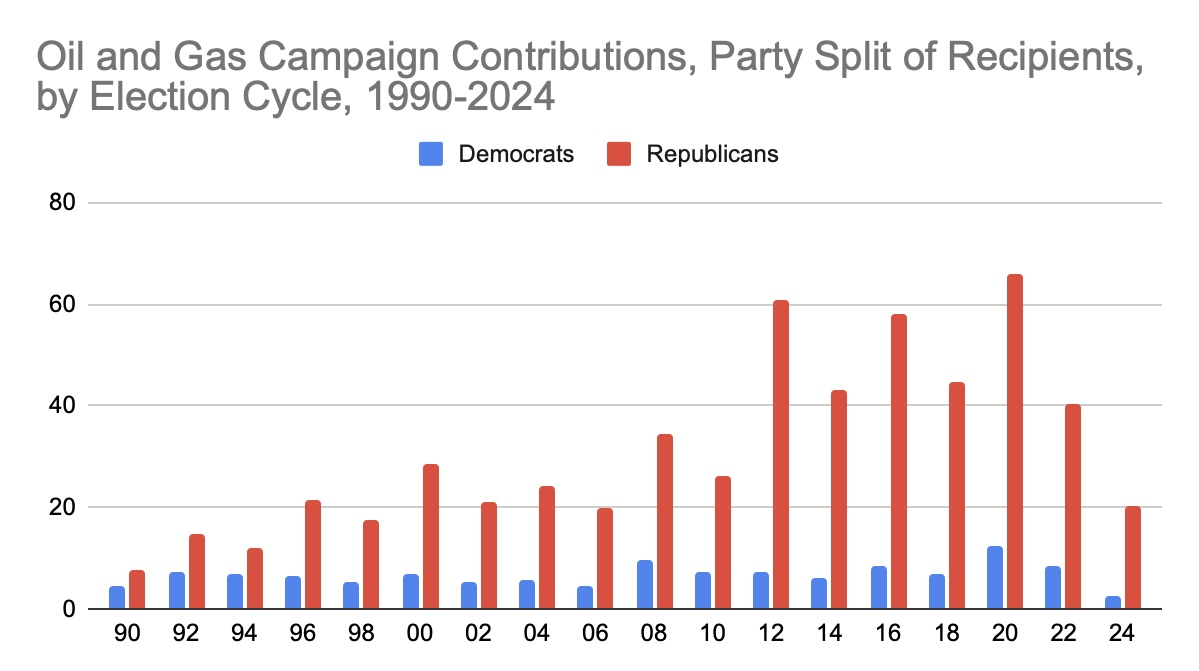
To identify these undecided legislators, one method interest groups can use is looking at campaign contributions and previous policy positions.2 Oil and gas are deeply connected with plastic production, as most plastics are made from natural gas and crude oil.3 The oil and gas industry contributes to Republican candidates far more than Democratic ones (Figure 1). This is largely because a majority of Democrats hold policy positions in support of environmental sustainability. Meanwhile, Republicans have historically supported deregulation and business interests over environmental protection.
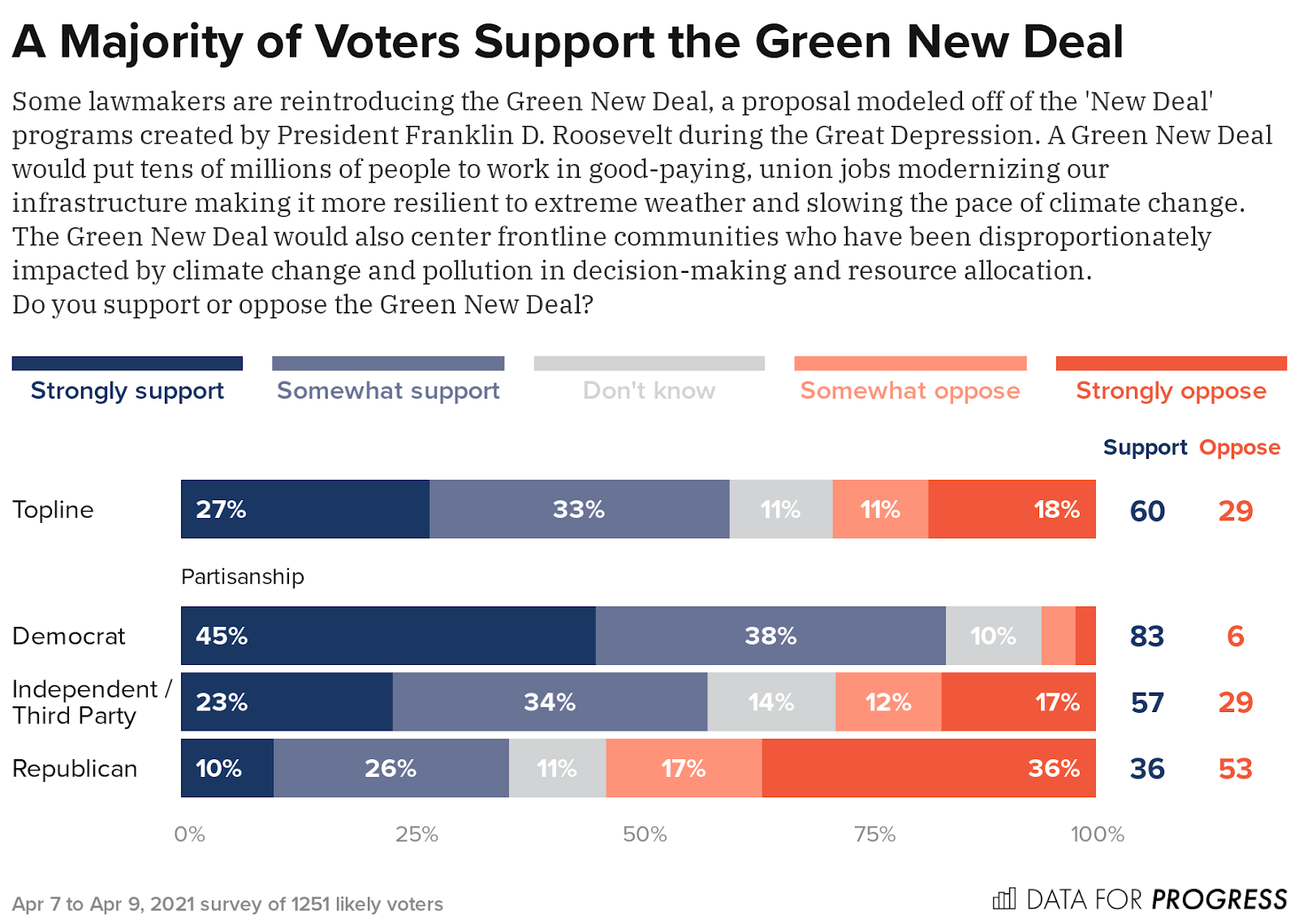
Figure 2 clearly shows this divide where a majority of Democrats support and a majority of Republicans oppose the Green New Deal—a proposed package to address climate change and economic inequality introduced by House Representative Alexandria Ocasio-Cortez and Senator Ed Markey.4
Through this analysis, we can conclude that interest groups should mainly target legislators in the partisan aisle, moderate Democrats and moderate Republicans. This is because the left-most-leaning Democrats already support environmental issues such as the ban on single-use plastic bags, and the right-most-leaning Republicans ideologically clash with the policy (Figures 1 and 2). By targeting moderate members of both parties, interest groups promote bipartisan support for environmental policies. This approach works to allocate the interest groups’ resources efficiently, as it costs more to change legislators’ policy positions at the extremes of the political spectrum.
Congress Inside Lobbying Tactics
Insider strategy refers to lobbying political elites directly, involving face-to-face interactions in meetings or committees or through phone and email. Specifically, I would use direct persuasion to engage with members of the Senate Environmental and Public Works Committee, the House Committee on Energy and Commerce, and legislators representing districts facing environmental issues or who have shown support for sustainability initiatives. These congresspeople are most likely to be informed and have positions on banning single-use plastic bags. Therefore, by scheduling meetings, interest groups can persuade Senators like Alex Padilla from California, a Senate Environmental and Public Works Committee member, to garner their endorsement. Senator Padilla is an outspoken advocate for climate action and, according to his “Issues” page, “is determined to fight the existential threat of climate change.”5 While Senator Padilla is a left-leaning Democrat and most likely agrees with a plastic bag ban, gaining his support is vital as it would bolster the effort’s legitimacy and credibility within Congress.
Furthermore, strategies such as direct persuasion paired with the provision of information/expertise interest groups can influence legislators who are on the fence regarding the ban. One target of this strategy could be Senator Jon Tester, a moderate Democrat from Montana. His policy stance regarding a ban on single-use plastic bags is unknown; nevertheless, one of the biggest economic industries in Montana is outdoor recreation, making it a state deeply reliant on environmental conservation. By providing information such as the fact that “ubiquitous plastic accumulation in Montana’s waters and soil, [resulted] in severe impacts on human health, wildlife, and recreational resources,”6 interest groups can persuade the senator by showing him that plastic pollution harms the environment which sustains one of the state’s biggest industries.
Moreover, as a chairman of the Senate Veterans Affairs Committee, Senator Tester has expressed a strong commitment to veterans’ health, particularly concerning the impact of environmental exposures during military service. Through the provision of information, interest groups can highlight the “severe impacts on human health”6 of plastic pollution and its disproportionate effects on elderly individuals, many of whom are war veterans, showing Senator Tester that this ban aligns with his policy positions. By emphasizing key points such as the policy’s positive economic, environmental, and social impacts, interest groups can spotlight the bipartisan nature of the ban. This would make the policy more appealing to Senator Tester—a moderate Democrat—nudging him toward supporting a federal ban on single-use plastic bags.
Congress Outside Lobbying Tactics
To complement inside lobbying efforts, interest groups can also employ outside tactics, which refer to influencing political elites by mobilizing the public. To do so, interest groups can launch public awareness campaigns. A prime example of how interest groups influenced policy using outside lobbying in the past is the 2020 George Floyd Black Lives Matter protests. These protests not only exemplified a powerful form of outside lobbying but also served as a pivotal catalyst for the George Floyd Justice in Policing Act, illustrating a profound capacity for the public to influence legislation. By channeling this momentum, interest groups have a significant opportunity to underscore the urgency of environmental sustainability to Congress. By doing so, they can push the legislature to prioritize critical sustainability goals, like banning single-use plastic bags. Therefore, public mobilization is a crucial way to set priorities in Congress and enforce transformative policy shifts toward environmental preservation.
In the case of Senator Tester, by purchasing advertisements in the form of billboards or television, groups can highlight the environmental consequences of single-use plastic bags, influencing public opinion in Montana. Moreover, these advertisements should emphasize the economic impact of climate change on Montana’s economy. By tailoring these to highlight that climate change can potentially wipe out “8,800 outdoor recreation jobs, and a staggering $263 million in labor earnings,”7 in Montana, interest groups can show the non-partisan nature of environmental conservation. This approach will appeal to various political ideologies as they reveal how environmental conservation and business interests are intertwined, building bipartisan public support for the ban.
Furthermore, according to the Cook Political Report, Senator Jon Tester is running for reelection in 2024. He has a competitive race, and the outcome is a “Toss Up” where either party has a good chance of winning. As congress members are single-minded seekers of re-election, this race means that Senator Tester will most likely seek to appease his electorate. Therefore, outside lobbying approaches, such as campaign contributions, will have a smaller influence on his policy positions. This opens the door for interest groups to influence policy via electoral pressure by organizing grassroots protests and encouraging constituents to contact Senator Tester to support the ban.
Lobbying the Presidency
Lobbying the presidency is significantly more challenging than lobbying Congress. The unitary essence of the executive makes it harder for interest groups to influence policy directly as a smaller circle of advisors takes part in the decision-making process. Furthermore, the opaque structure of the process, paired with policies that are presented as a unified stance, makes it harder to identify diverse opinions within the branch. Consequently, interest groups should focus on building solid relationships with key advisors and staff to gain indirect influence over the President’s decisions.
Key officials such as Andrew Mayock, the Federal Chief Sustainability Officer, and Ali Zaidi, Assistant to the President and National Climate Advisor, are prime targets for lobbying due to their direct access to the President. Furthermore, understanding their priorities and the specific issues they champion is crucial for interest groups to frame their message in a way that resonates with these officials, increasing the likelihood of gaining their support. This approach ensures that the lobbying for a ban on single-use plastic bags resonates at the highest levels of executive power, thereby maximizing the potential for policy enactment.
Presidency Inside Lobbying Tactics
Interest groups can use inside lobbying strategies such as the provision of information to aid the research efforts of presidential advisors such as Andrew Mayock and Ali Zaidi. By providing detailed research-backed documents and accounts highlighting the need for regulation against plastic pollution, interest groups can potentially reduce the workload of these key officials. For instance, the National Caucus of Environmental Legislators conducted research and found that marine plastic pollution damages fisheries, aquaculture, cultural heritage, and recreational experiences, causing losses of up to $2.5 trillion per year8—subsidizing their internal research efforts. Furthermore, by hosting and sponsoring public events attended by the President and his advisors, interest groups gain direct access to lobby individuals like Mr. Mayock and Mr. Zaidi. In this setting, they can use direct persuasion to raise the profile of the issue and gain influence with individuals within the White House.
Furthermore, when agencies hold hearings or workshops to gather input on environmental issues, interest groups are given a platform to directly advocate for policies such as banning single-use plastic bags. Interest groups can increase their influence on the decision-making process by attending public hearings and workshops. During these events, they can present evidence and arguments to key figures such as Mr. Mayock and Mr. Zaidi, who are involved in the executive branch’s environmental sustainability efforts. For instance, they can highlight studies that demonstrate the effectiveness of a plastic bag ban in reducing the volume of plastic waste in the ocean. This could open up opportunities for members of interest groups to be appointed to these agencies and influence policy from within, directly advocating for policy changes like a ban on single-use plastic bags.
Presidency Outside Lobbying Tactics
The presidency plays a double role in outside lobbying, as they can be lobbied and used as a force for lobbying Congress. One outside lobbying strategy that can directly target the president is mobilizing public support by orchestrating media campaigns. The president is often concerned with his legacy, and paired with the fact that 2024 is a presidential election year, this makes him uniquely vulnerable to public pressure. Therefore, interest groups can organize grassroots protests to influence the president to act and prioritize issues such as a ban on single-use plastic bags.
Furthermore, interest groups can use television advertisements and social media to influence the national conversation about plastic bag bans. For instance, they can highlight that in some jurisdictions, plastic bag bans have already reduced plastic bag litter by at least one-third.9 This can be an effective strategy to reduce political polarization on the issue, demonstrating that the policy has been successful in other places. In turn, it serves as an approach to lobbying both the presidency and Congress, making the problem more socially acceptable and popular, promoting bipartisanship so legislators feel more comfortable voting in favor of the policy.
In the case of a grid-locked Congress, interest groups can lobby for executive actions. This external force can encourage the president to consider using executive orders—or the threat of them—to signal their priorities and seriousness on an issue, pressuring Congress to act or compromise. Moreover, if an executive order is issued, it can be used to ‘test the waters’ for a policy change, possibly encouraging Congress to enact more permanent legislation in the long run. These methods of lobbying the presidency also work to lobby Congress, showing widespread institutional support for policy change and making the case for a nationwide ban on single-use plastic bags more persuasive.
Appraisal of Campaign Success
This lobbying strategy is a comprehensive approach to advocate for a federal single-use plastic bag ban. The success of this effort depends on several factors, including the political climate, public support, and opposition from industries and political factions. The successful implementation of this campaign largely depends on identifying the correct political climate, as political polarization is at an all-time high, and policies are passed through by very narrow margins. Furthermore, the strategy hinges on interest groups’ ability to frame the ban to Congress and the Presidency as an issue of bipartisan support and strong public interest. To address these issues, the campaign aims to target key swing voters in Congress for legislative action and use the Presidency to complement these efforts through national support and advocacy.
Interest groups will adopt a multipronged lobbying approach targeting Congress and the Presidency to tip the scales in favor of nationwide support for this policy. They will use inside lobbying strategies to influence policymaking by showing Congress and the Presidency the significant environmental harm of plastic pollution and its impact on all Americans. Using outside lobbying strategies, they can take advantage of strategic timing by using grassroots protests to support the policy in an election year. This plan primarily targets Senators like Jon Tester and aims to gain the backing of individuals like Andrew Mayock and Ali Zaidi. However, interest groups must be prepared to counter strong opposition from industries invested in plastic production and those adhering to ideologies of minimal government intervention. Nevertheless, this effort is a critical step in influencing the successful passage of a federal single-use plastic bag ban.
Works Cited
- “Climate Policy Office | the White House.” The White House, 13 Oct. 2022, www.whitehouse.gov/cpo.
- “Energy and Environment - Senator Alex Padilla.” Senator Alex Padilla, 23 Feb. 2023, www.padilla.senate.gov/about/issues/environment.
- “First in Science: The Economic Impacts of Plastic Pollution | National Caucus of Environmental Legislators.” National Caucus of Environmental Legislators, 8 Dec. 2022, www.ncelenviro.org/articles/first-in-science-the-economic-impacts-of-plastic-pollution.
- “Oil And Gas Summary.” OpenSecrets, www.opensecrets.org/industries/indus?ind=E01.
- “Plastic Bag Bans Work.” Environment America Research & Policy Center, 23 Jan. 2024, environmentamerica.org/center/resources/plastic-bag-bans-work.
- “Public Lands - Senator Jon Tester.” Senator Jon Tester, 29 July 2022, www.tester.senate.gov/about/issues/public-lands.
- Behm, Jon. “The Pros and Cons of Plastic Bag Bans.” Dumpsters.com, 17 Feb. 2023, www.dumpsters.com/blog/plastic-bag-bans.
- Blank, Lew, and Danielle Deiseroth. “Voters Overwhelmingly Support the Green New Deal.” Data for Progress, 25 July 2023, www.dataforprogress.org/blog/2021/4/19/voters-support-green-new-deal.
- Eavis, Victoria. “Environmental Firm Sues State of Montana Over Single-use Plastics Law.” Independent Record, 6 Dec. 2023, helenair.com/news/state-regional/crime-courts/plastic-singleuse-plastics-cottonwood-missoula-bozeman-legislature-courts-lawsuit-constitution/article_bf64cdd0-93a0-11ee-b19e-13156e0d2172.html.
- Federation, British Plastics. “How Is Plastic Made? A Simple Step-By-Step Explanation.” British Plastics Federation, www.bpf.co.uk/plastipedia/how-is-plastic-made.aspx.
- Leadership | Office of the Federal Chief Sustainability Officer. www.sustainability.gov/leadership.html.
- Power, Thomas Michael. “The Economic Impact of Climate Change in Montana.” PreventionWeb, 12 Jan. 2024, www.preventionweb.net/publication/economic-impact-climate-change-montana.
Notes
-
Behm, The Pros and Cons of Plastic Bag Bans. ↩
-
Oil And Gas Summary, OpenSecrets. ↩
-
British Plastics Federation, How Is Plastic Made. ↩
-
Blank and Deiseroth, Voters Overwhelmingly Support the Green New Deal. ↩
-
Senator Alex Padilla, Energy and Environment. ↩
-
Eavis, Environmental Firm Sues State of Montana Over Single-use Plastics Law. ↩ ↩2
-
Power, The Economic Impact of Climate Change in Montana. ↩
-
NCEL, First in Science: The Economic Impacts of Plastic Pollution. ↩
-
Plastic Bag Bans Work, Environment America. ↩