In the realm of philosophy, Friedrich Nietzsche once mused, ‘There are no facts, only interpretations.’ This epistemological quagmire forms the narrative crucible of Akira Kurosawa’s cinematic masterpiece Rashomon. The film interrogates our understanding of truth, weaving a complex tapestry of narratives that present truth as relative, subjective, and intrinsically tied to personal perspective. This investigation into the nature of truth finds an unlikely companion in the creation of nationalism through nationalistic myths and sentiments. A nation’s identity is often crafted on the anvil of a shared narrative—a single version of historical, cultural, or ideological ‘truth.’1 While Akira Kurosawa’s Rashomon emphasizes the relativity of truth and showcases how individual perspectives can shape it, nationalism often forces a single narrative, overlooking the complexities and variations of personal experiences.
Understanding Truth in Rashomon
In the realm of cinema, few films have scrutinized the nebulous nature of truth as Akira Kurosawa’s Rashomon. It opens a dialogue on the multifarious nature of reality, reflecting the ancient parable of the ‘blind men and the elephant.’ Each character in Rashomon provides their subjective account of a single event, much like the blind men, each perceiving a different part of the elephant and thus reporting a drastically different ‘truth.’
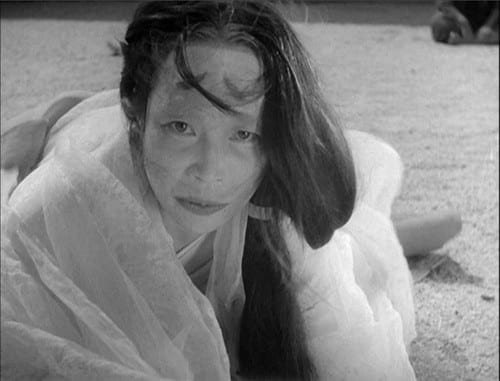
Delving into the film, one recognizes that each character’s version of the truth is deeply rooted in their personal motivation and subjective experience. The woodcutter, the bandit, the wife, and the samurai’s spirit through a medium—all tell their stories in ways that portray them as the most sympathetic character or the least guilty party. This narrative device illuminates an essential truth—that our perception of reality is shaped by our individual motivations and experiences. As such, the concept of an ‘absolute truth’ becomes elusive and subjective. Inherent in Rashomon’s narrative structure is an essential critique of the notion of a single, objective truth. The film advocates for a more nuanced understanding of reality, acknowledging the coexistence of multiple, often conflicting ‘truths.’ Kurosawa cleverly uses the device of multiple perspectives to suggest that any claim to a definitive truth might be overly simplistic and potentially fallacious when based solely on a singular perspective.
Understanding Truth in Nationalism
Forging a nation from the crucible of diverse experiences and voices is an intricate process, often anchored in a single version of a shared history, culture, or a set of values that aim to unify the people. This is evident in the construction of nationalism, particularly in the case of Japan through the discourses of Nihonjinron. One of the components of Nihonjinron is the myth of Kokutai, translated as “‘national essence’ or ‘national polity’”, it states that the emperor is part of “an unbroken imperial line, to which all the Japanese were linked by blood.”2 Through Kokutai, “the emperor was defined as a father of the nation, one to whom all Japanese people were obliged to pay absolute loyalty and obedience.”2 The ideology of Kokutai serves to legitimize the socio-political power of the ruling group by associating them with an esoteric divine pure race.3 It is a perfect example of anchoring the people of the Japanese Archipelago to a single perspective, creating a shared history, culture and purpose. Nationalism, in this case, can be viewed as a form of collective storytelling, where a singular narrative is put forth, and glorified as the ‘national truth,’ creating Benedict Anderson’s so called “imagined community” with a shared identity, fostering a sense of belonging while sidelining those who diverge from this dominant account.
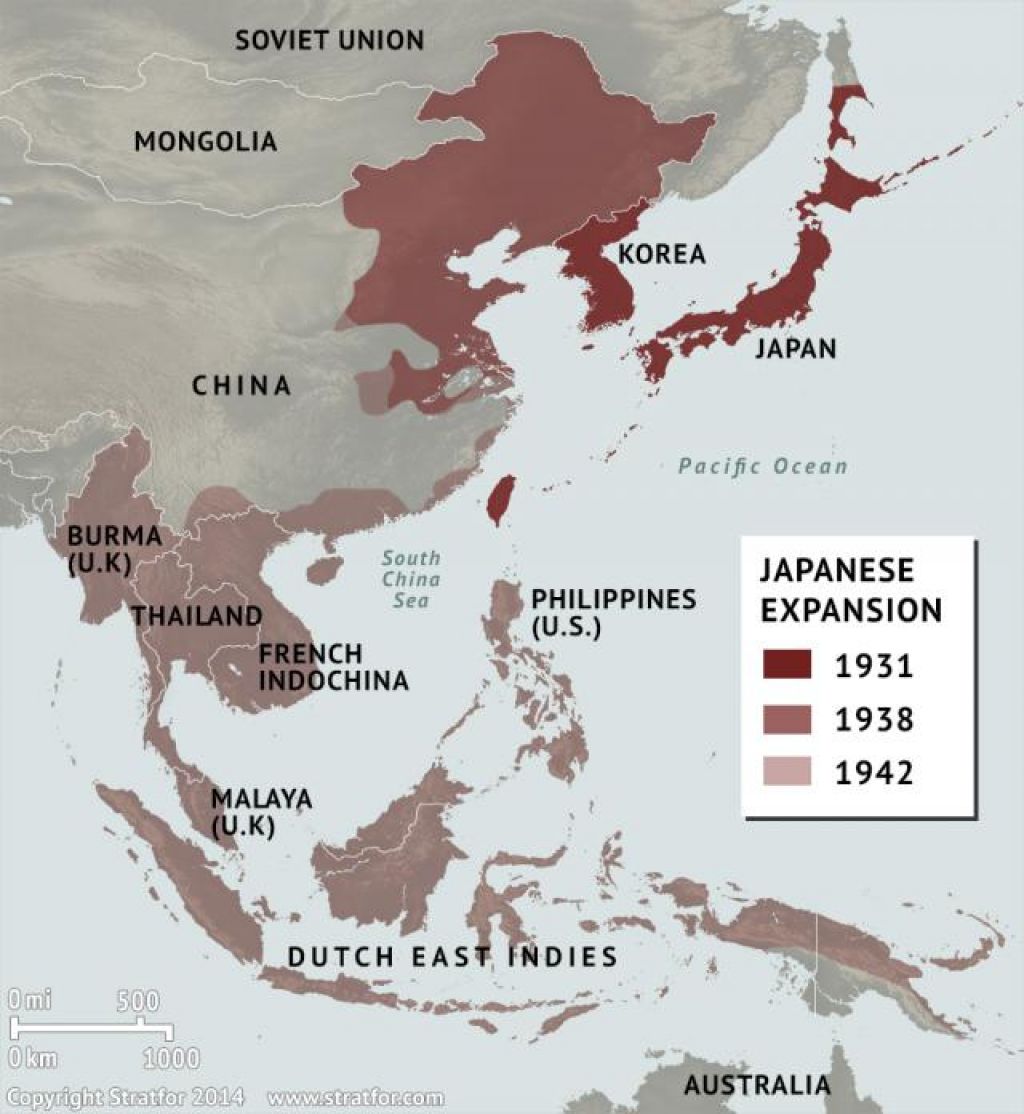
Much like the narrative construction in Rashomon, where ‘truth’ is manipulated by individual motivations and perceptions, the story of Kokutai is molded by the interpretation and viewpoints of its narrators. Kokutai is an example of Eric Hobsbawm’s “Invented Tradition”, where during the expansion of the Japanese Empire, the tradition of Kokutai changed in response to the annexation of Korea and Taiwan. The Japanese Empire propagated the notion that Japan’s ‘uniqueness’ lies in its capacity to integrate different racial groups and foster a harmoniously united society.4 This process of curating a single, prevailing narrative echoes the central theme of Rashomon—the molding of truth by subjective viewpoints. Similarly, just as Rashomon presents multiple interpretations of truth, each colored by the character’s experiences and biases, the crafting of nationalism can be perceived as shaping a ‘truth’ from a dominant ruling standpoint.
Rashomon’s Critique of Nationalism
In the heart of the film lies the theme of exclusion, revealed through the disparate accounts of the characters. Each character’s interpretation of the events starkly conflicts with the others, highlighting the process of marginalization that occurs when a singular narrative is heralded as the ‘truth.’ Much like in the formation of nationalist ideologies, where a single, dominant narrative often takes precedence, Rashomon exposes how the monolithic truth often leads to the silencing of diverse voices and experiences. Simultaneously, the movie underscores the potential for manipulation inherent in the creation of narratives. Where, each character in the film adjusts the story to serve their interests, presenting a distorted version of the events. This mirrors how nationalist narratives can be contorted to serve the interests of those in power, emphasizing the need for skepticism and a critical assessment of these ‘truths.’
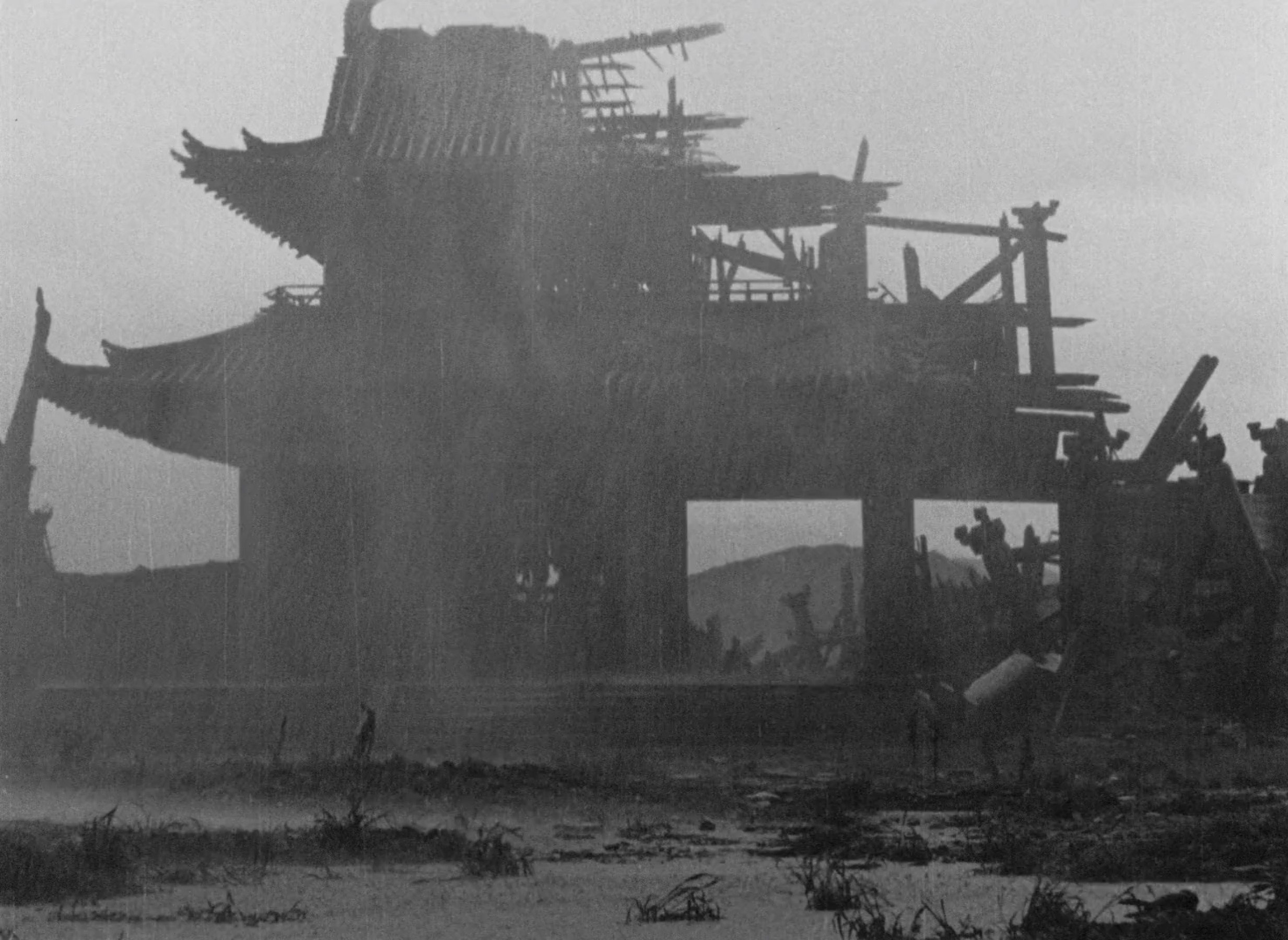
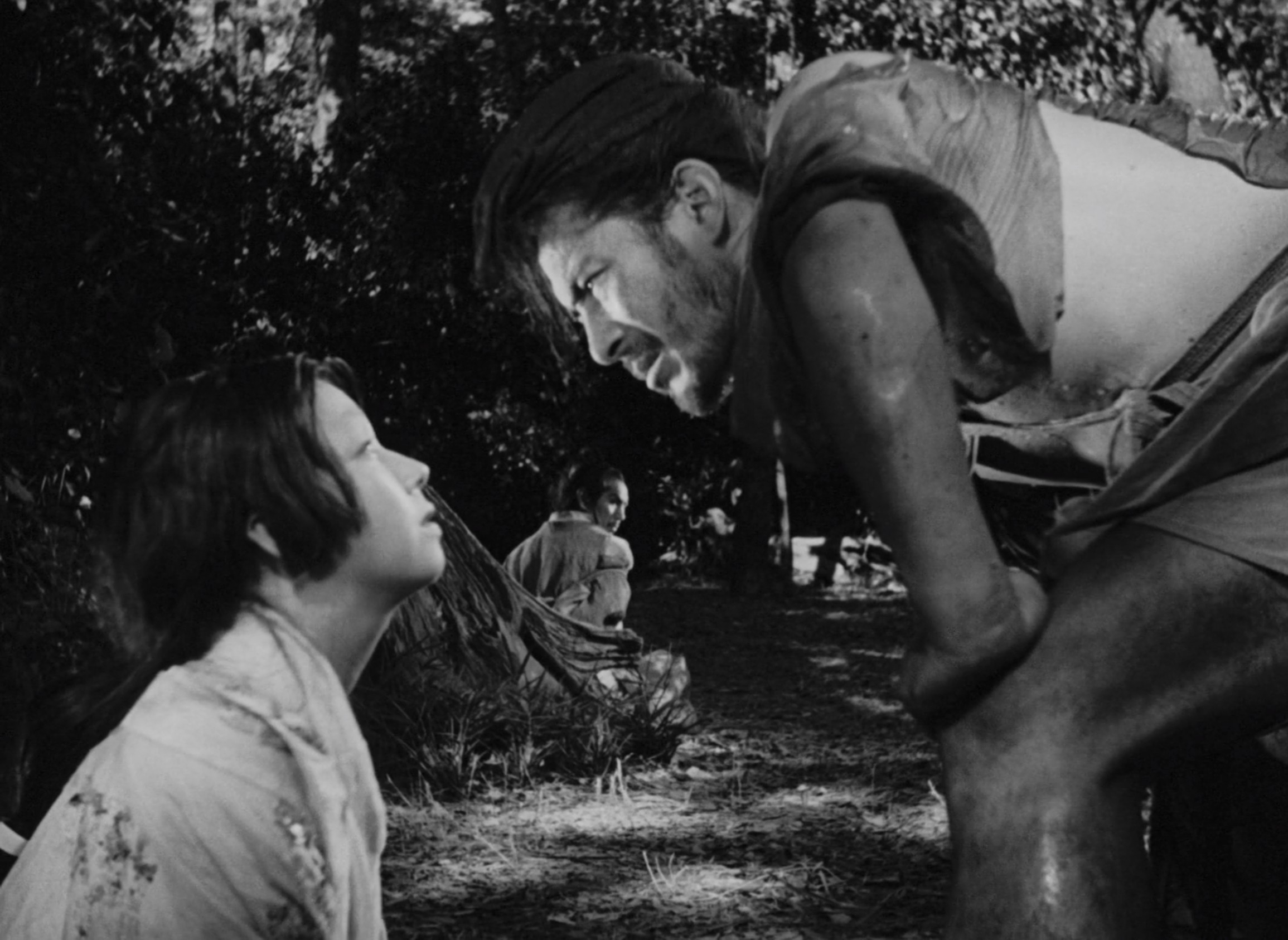
The film’s exploration of subjective truth and differing perspectives is further enhanced through symbolic imagery. The Rashomon Gate, standing dilapidated and forgotten, is a stark symbol of the fluidity of national identity, challenging the glorified narratives of the past often celebrated in nationalism. Similarly, the dense, confusing forest housing the incident is a metaphor for the nation itself, teeming with a multitude of perspectives and truths. These images challenge nationalist discourses that attempt to simplify and neglect intricate narratives.
The duel, retold to suit each character’s self-perception, illustrates how narratives can be manipulated to fit specific agendas. This is akin to nationalist narratives that often favor heroic or victim stories to serve particular objectives. Moreover, the medium’s recounting of the samurai’s story is a critique of the myth-making (invention of traditions) often inherent in nationalist narratives, highlighting the way that even deceased or historic figures, who are often viewed as reliable or untainted sources in nationalist narratives, can still have their stories distorted or embellished. While the wife’s disappearing dagger underscores how symbols of national pride can be distorted to fit narratives. The mutable story of the dagger in Rashomon underscores this ability of symbols to take on varying narratives and meanings, reminding us to critically examine and question the way symbols are used in the narratives we are presented with, particularly in the context of nationalism.
Kurosawa, a national symbol, criticizes nationalism?
While Akira Kurosawa is celebrated as one of Japan’s most influential filmmakers, it is notable that his film Rashomon carries a complex critique of the very notion of a unified national narrative. This critique, intentionally or not, destabilizes the foundations of nationalism and the simplification of truth often found in its narratives. By revealing the intricate web of individual experiences and subjective realities, Rashomon calls into question the very notion of an authoritative national narrative, urging us to grapple with the complexities, contradictions, and multiplicities of truth within a nation. In doing so, Kurosawa invites us to approach nationalism, and indeed all grand narratives, with a discerning gaze, to question, and to seek understanding beyond the superficial.
Thus, even as Kurosawa has become a national symbol himself, his work illuminates the deeper layers of national identity and cautions against the oversimplification and manipulation of narratives. Just as Rashomon presents multiple interpretations of a single event, so too does a nation encompass myriad experiences, voices, and truths. In this sense, Kurosawa, through Rashomon, is not simply a critic of nationalism but a proponent of a more nuanced, inclusive understanding of the nation state.
Rashomon stands as a powerful exploration of subjective truth and an incisive critique of the singular narrative that often underpins nationalism. By exposing the limitations of a single truth, the film challenges us to embrace the complexities, contradictions, and variations of individual experiences within a nation. This film’s insights remain highly relevant today, as we continue to navigate the intricate landscape of national and personal narratives. As we strive to build inclusive societies that value every voice and perspective, Rashomon serves as a vital reminder that there are indeed no facts, only interpretations.
Works Cited
- Hobsbawm, Eric, and Terence Ranger. “The invention of tradition.” Labour / Le Travail, vol. 18, 1986, p. 313. https://doi.org/10.2307/25142744.
- Ko, Mika. Japanese Cinema and Otherness: Nationalism, Multiculturalism and the Problem of Japanesenesss [i.e. Japaneseness]. 2010, ci.nii.ac.jp/ncid/BB0058910X.
- Reid, Anthony, and Benedict Anderson. “Imagined Communities. Reflections on the origin and spread of nationalism.” Pacific Affairs, vol. 58, no. 3, Jan. 1985, p. 497. https://doi.org/10.2307/2759245.